

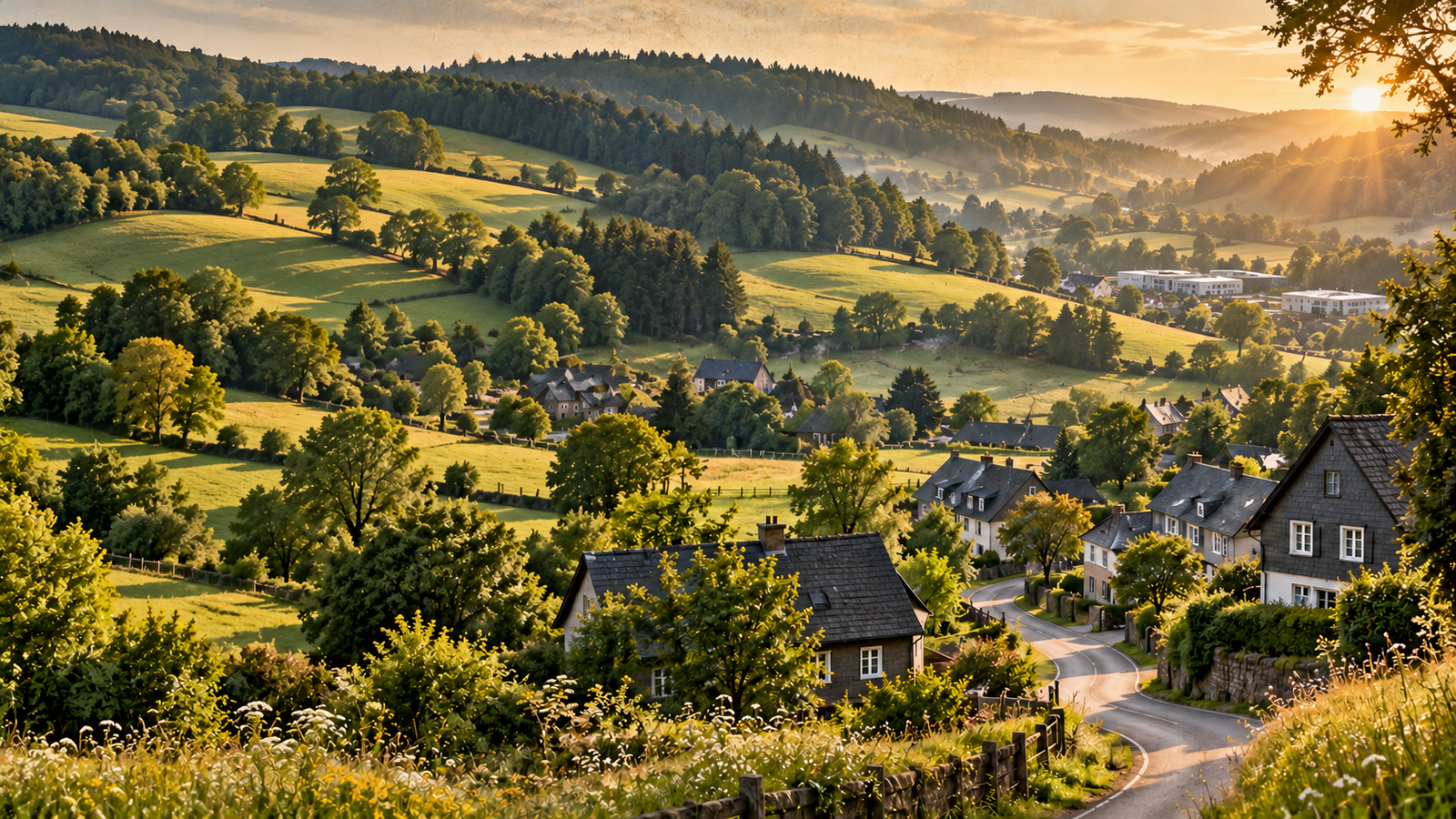
Wenrath is commonly associated with Wehnrath, a locality in Reichshof, Germany, with historical references reaching back to the Middle Ages. The name can surface in company addresses, professional directories, and searches for older records, leaving readers wondering what it identifies. Understanding the place behind the spelling provides a clearer answer. These seven facts explain its location, historical background, administrative identity, and business connections, along with practical ways to interpret the name when it appears in a document.
What Is Wenrath?
Wenrath is a spelling found in some documents connected with Wehnrath, a settlement within the German municipality of Reichshof. It should not automatically be treated as a separate town or a word with an established dictionary definition.
The name attracts geographic, business, and historical searches because these subjects overlap. A company address can lead to the locality, while research into that locality can reveal much older forms of its name.
Fact 1: Wenrath Has a Connection to Wehnrath
The relationship between the two spellings is supported by documents that connect them with the same location. A German professional directory, for example, lists “Wenrath” beside postal code 51580 while identifying the associated company location as “Reichshof Wehnrath.”
The modern municipal spelling is Wehnrath, with an “h” after “We.” The shorter version may reflect an omission during typing or copying, although the cause cannot be established for every occurrence.
For readers, the important point is the shared location in identifiable records. Matching the municipality, company, and postal code provides stronger evidence than spelling similarity alone.
Fact 2: Wehnrath Is Located in Reichshof, Germany
Wehnrath lies within Reichshof in North Rhine-Westphalia, a state in western Germany. Reichshof belongs to the Oberbergischer Kreis, the district responsible for the wider area.
The surrounding Oberbergisches Land has a hilly landscape with woods, meadows, and scattered settlements. This setting helps explain why the area combines village life with commercial development rather than resembling a continuous urban center.
The geographic names describe different levels of location. Wehnrath identifies the settlement; Reichshof identifies its municipality. Oberbergischer Kreis is the district, and North Rhine-Westphalia is the state. Recognizing that order makes German addresses and regional descriptions easier to follow.
Fact 3: Wehnrath Has a Centuries-Old History
Historical summaries report 1357 as the earliest known documentary mention associated with Wehnrath. The recorded name appears as Wenegenroede, a form noticeably different from the modern spelling.
The account refers to Eckhardt von Wenegenroede, who reportedly supported Archbishop Wilhelm von Gennep of Cologne during a conflict involving the Count of Arnsberg. This historical summary draws on published research into the earliest written mentions of settlements in the Oberberg region.
However, a first documentary mention is not a founding date. People may have lived in a settlement before surviving records named it.
The medieval form also does not prove an exact translation of the name or establish Wenrath as a documented stage in its development. Those questions require more specific linguistic evidence.
Fact 4: Wehnrath Is a Locality, Not an Independent Town
Wehnrath is one of the settlements belonging to Reichshof. German descriptions use words such as Ort or Ortschaft, which can mean “locality” or “settlement.”
Reichshof is the municipality, while Wehnrath identifies a smaller place within its boundaries. This distinction matters when reading an address or looking for municipal information.
An address written as “Reichshof-Wehnrath” gives both the municipality and the locality. An address using only “Reichshof” may still refer to the same destination when the street and postal code match.
The present municipality of Reichshof was formed in 1969 through the consolidation of Denklingen and Eckenhagen. That administrative change is much more recent than the historical roots of its individual settlements.
Fact 5: The Area Has an Industrial and Business Presence
Wehnrath is associated with an established commercial area. Municipal information identifies the Wehnrath industrial area and the Wehnrath-Sinspert business park, while Gewerbepark Wehnrath brings local businesses together to promote the location and attract employees.
One internationally recognizable connection is Schwalbe, the bicycle-tire brand associated with Ralf Bohle GmbH. The company states that its headquarters in Reichshof-Wehnrath was completed in 1995.
That business presence gives the locality visibility beyond Germany. Someone researching a supplier, bicycle product, employer, or company certificate may encounter the address without previously knowing the settlement.
It also explains why business-related search results can be more prominent than general descriptions of village life.
Fact 6: Wenrath Appears in Different Types of Records
The shorter spelling appears in professional and commercial material, including a directory, a company certificate, and a laboratory document. These examples show that its use extends beyond articles discussing the name.
Different records offer different clues:
- Business directories can connect the spelling with a company and postal code.
- Company addresses can identify the street and municipality.
- Geographic references can place the name within a wider region.
- Historical records may preserve older forms that need separate interpretation.
- Transcribed documents may contain differences introduced during copying or scanning.
A repeated spelling does not necessarily represent an independent confirmation. Several directories may reproduce the same original entry. When accuracy matters, compare the information with the underlying document or the organization’s own address.
Fact 7: The Meaning of Wenrath Depends on Context
An isolated name provides limited information. Wenrath in an address field may indicate a location, while the same letters in a family document could require a different explanation.
Start with the surrounding details. Look for a street name, postal code, municipality, company, or clearly labeled surname field. Then compare the complete entry with another record.
In genealogy, avoid assuming that a place name is a surname simply because it appears beside a person’s name. Likewise, a possible transcription error should be checked against the original image before being corrected.
Preserve the original spelling in your notes and record any proposed identification separately. This keeps the evidence distinct from your interpretation.
Frequently Asked Questions
What is Wenrath?
Wenrath is a spelling appearing in some documents associated with Wehnrath, Germany. Its intended meaning depends on the surrounding information, particularly company names, address details, and geographic references.
Where is Wenrath located?
When Wenrath refers to Wehnrath, it identifies a locality within Reichshof in the Oberbergischer Kreis district of North Rhine-Westphalia, western Germany, rather than an independently established town.
What is the connection between Wenrath and Wehnrath?
The two spellings appear in records connected with the same locality. Wehnrath is the modern municipal spelling, while Wenrath occurs in some professional documents and business addresses.
What is the history of Wehnrath?
Historical summaries report a documentary reference from 1357 using the form Wenegenroede. This indicates medieval roots, although it does not establish when the settlement was founded or first inhabited.
Why is Wenrath mentioned in business records?
The associated locality has a commercial area and internationally connected companies. Their addresses appear in directories, certificates, and other business documents, occasionally using Wenrath instead of Wehnrath.
Final Thoughts
Wenrath becomes easier to understand when its spelling is connected with a specific place and record. Wehnrath’s position within Reichshof, reported medieval history, and established business community explain why the name appears in different searches. For anyone checking an address or tracing an older reference, the most useful approach is to compare the surrounding details, distinguish historical forms from modern spellings, and leave uncertain identifications open.
