

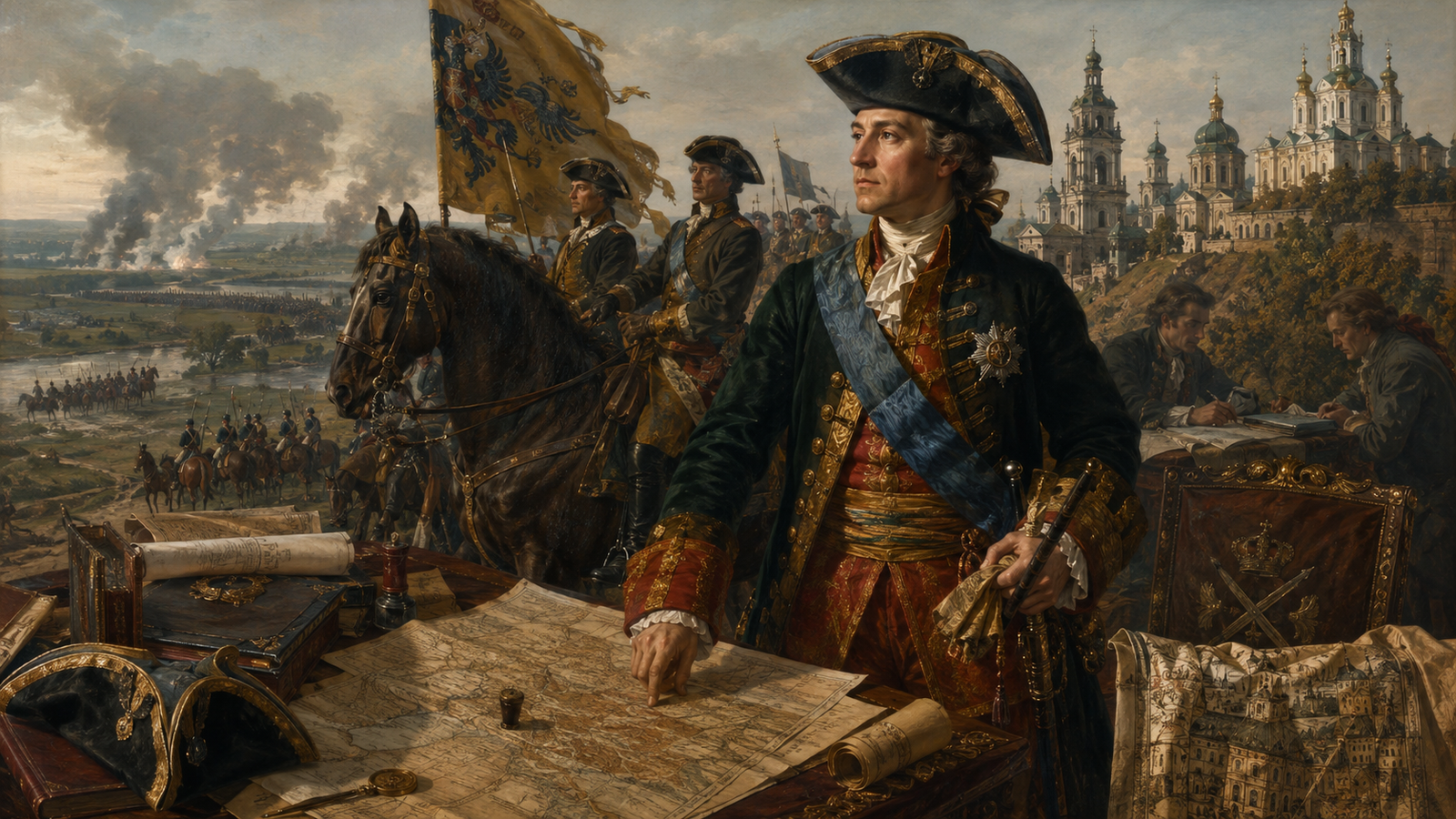
Bernhard Weißbach is a name most closely associated with Johann Bernhard von Weisbach, an 18th-century military commander, diplomat, and administrator who served the Russian Empire during the reign of Peter the Great. Known for his cavalry leadership in the Great Northern War, his connection to the Battle of Poltava, diplomatic work in Vienna, and later role as Governor-General of Kyiv, Weisbach remains a notable figure in early imperial Russian history. However, spelling variations and unrelated modern records mean that not every Bernhard Weißbach reference refers to the same person.
Who Was Bernhard Weißbach?
Bernhard Weißbach is most strongly associated in historical contexts with Johann Bernhard von Weisbach, a 17th and 18th-century military officer, diplomat and administrator who served the Russian Empire during the era of Peter the Great. However, the name is not unique. Modern records also contain unrelated people named Bernhard Weißbach, so every matching record should not automatically be assigned to the historical general.
Johann Bernhard von Weisbach became known through his cavalry command during the Great Northern War, his connection with the Battle of Poltava in 1709, diplomatic work involving Austria, and his later position as Governor-General of Kyiv.
The historical figure appears under several spellings, including Weißbach, Weissbach, Weisbach, von Weisbach, Graf Weißbach, Veisbakh and Вейсбах. These variations reflect differences between German spelling, Russian transliteration and historical recording practices.
Bernhard Weißbach at a Glance
| Category | Verified Information |
|---|---|
| Full historical name | Johann Bernhard von Weisbach / Johann Bernhard Graf Weißbach |
| Alternative spellings | Weißbach, Weissbach, Weisbach, Veisbakh, Вейсбах |
| Born | 1665 |
| Birthplace/origin | Usually described as Bohemia; some sources discuss broader Central European origins |
| Died | 24 August 1735 (Old Style; also given as 4 September New Style) |
| Background | Central European military officer serving the Russian Empire |
| Military service | Austrian/Habsburg service before Russian service |
| Rank | General of Cavalry; later General-in-Chief |
| Known for | Great Northern War service, Poltava, diplomacy, Kyiv administration |
| Battle of Poltava | Associated with Russian cavalry command on the right wing |
| Diplomatic role | Russian mission connected with Vienna in 1719 |
| Kyiv role | Governor-General of Kyiv from 1731 |
| Awards/titles | Order of St. Alexander Nevsky, Order of St. Andrew; count title from Emperor Charles VI |
| Burial place | Poltava, although the exact burial location is uncertain |
Some details of his early life and exact birthplace remain debated because surviving records focus mainly on his military and political career.
Is Bernhard Weißbach the Same as Johann Bernhard von Weisbach?
In historical military contexts, the name Bernhard Weißbach usually refers to Johann Bernhard von Weisbach. However, this identification requires context.
The German surname creates several forms:
- Weißbach: Original German spelling using the letter ß.
- Weissbach: Standard replacement of ß with ss.
- Weisbach: A simplified spelling frequently found in English-language historical writing.
- von Weisbach: A noble-style form used in some records.
- Graf von Weisbach / Graf Weißbach: References his count title.
- Veisbakh / Вейсбах: Russian transliteration forms.
These forms often describe the same historical officer, but spelling alone does not prove identity. A database entry containing only “Bernhard Weißbach” could refer to a different person.
This distinction matters because modern genealogy databases, business records and personal directories contain unrelated individuals with similar names.
Early Life and Central European Background
Johann Bernhard von Weisbach was born in 1665. His early biography is less documented than his later career.
Historical descriptions generally place him within the Central European military environment of the late seventeenth century. Several sources identify him with Bohemia, while other traditions connect him more broadly with German-speaking Central Europe.
He appears to have begun his military career in Austrian or Habsburg service. This background was important because experienced Central European officers were highly valued by expanding states seeking professional soldiers.
The political landscape of the period encouraged military mobility. Officers frequently moved between imperial armies, bringing technical knowledge, battlefield experience and organizational skills with them.
Why Johann Bernhard von Weisbach Entered Russian Service
Peter the Great’s military reforms created demand for experienced foreign officers. After Russia’s defeats and challenges during the early stages of the Great Northern War, the emperor worked to create a more modern army based on European military methods.
Weisbach entered Russian service in 1707. He received command responsibilities connected with dragoon forces, including the Belozersky Dragoon Regiment.
His background made him useful to Russia because dragoons combined cavalry mobility with battlefield flexibility. They could fight mounted or operate as mobile infantry, making them valuable in the changing warfare of the early eighteenth century.
Military Career During the Great Northern War
Weisbach’s military reputation developed during Russia’s long struggle against Sweden.
During the campaigns before Poltava, he participated in operations involving Swedish forces, including actions around Holowczyn and Smolyany. In 1709, before the decisive battle, he gained recognition for cavalry operations, including the fighting near Rashevka.
At the Battle of Poltava, his performance strengthened his position in the Russian command structure. After the victory, he continued to receive promotions.
Important stages of his military career included:
- Entry into Russian service in 1707.
- Command responsibilities in dragoon formations.
- Participation in the 1709 campaign against Sweden.
- Promotion after Poltava.
- Continued command of cavalry forces in Ukraine.
Bernhard Weißbach and the Battle of Poltava
The Battle of Poltava on 27 June 1709 was one of the most important battles of the Great Northern War.
The conflict involved Russia under Peter the Great and Sweden under Charles XII. The Russian victory ended Sweden’s dominance as a major European power and dramatically increased Russia’s influence.
Johann Bernhard von Weisbach is associated with cavalry command during the battle, particularly on the Russian right wing. Historical accounts describe him as taking part in the pursuit of the defeated Swedish army after the battlefield victory.
The pursuit continued toward Perevolochna, where large parts of the Swedish force eventually surrendered.
Although Weisbach played an important role, he should not be described as the main commander responsible for the entire victory. Poltava involved many senior Russian officers, and his significance lies in his cavalry leadership within the larger Russian operation.
His Military Career After Poltava
After Poltava, Weisbach continued serving Russia.
In 1711, he participated in Peter the Great’s unsuccessful Pruth campaign against the Ottoman Empire. Afterward, he was involved in defending southern Russian territories and Ukrainian regions against Crimean Tatar raids.
One notable episode occurred near Bohodukhiv (Bogodukhov) in 1713, where he defeated Crimean Tatar forces.
During the following years he held important military commands connected with Ukraine and border defense. His experience made him valuable as Russia expanded its administrative and military presence in the region.
Diplomatic Mission to Vienna
Weisbach’s career was not limited to warfare. In 1719, he received a diplomatic assignment connected with Vienna.
Peter the Great often relied on experienced military officers for diplomatic missions because they understood both strategic affairs and international politics.
Weisbach’s mission involved Russian interests at the Austrian court and relations connected with the House of Holstein. The assignment demonstrated the trust placed in him beyond battlefield command.
Command in Little Russia and Rise to General of Cavalry
Around 1720, Weisbach became associated with command responsibilities in Little Russia, the historical term used by the Russian Empire for parts of present-day Ukraine.
He later served in connection with the Military College, an important institution responsible for military administration.
In 1725, he received the rank of General of Cavalry, marking his rise among Russia’s senior military leaders.
His career shows a pattern common among successful imperial officers of the period: battlefield service followed by administrative and political responsibilities.
Grodno, Count Title and Imperial Honors
Weisbach continued to receive recognition during the 1720s and 1730s.
He participated in diplomatic activity connected with Grodno and represented Russian interests in negotiations.
He received the Order of St. Alexander Nevsky in 1730. Emperor Charles VI also granted him a count title. Later, he received the Order of St. Andrew the First-Called, one of the highest Russian imperial honors.
The exact sequence of some honors differs between sources, but his elevated status in Russian imperial service is well documented.
Bernhard Weißbach as Governor-General of Kyiv
One of the most important later roles of Bernhard Weißbach was his appointment as Governor-General of Kyiv in late 1731.
At that time, Kyiv was a strategically important city within the Russian Empire. It served as a military and administrative center near the empire’s southwestern frontier.
As Governor-General, Weisbach combined military authority with regional administration. His responsibilities included maintaining security, supervising military matters and managing imperial interests in a sensitive border region.
His appointment reflected the confidence Russian rulers placed in experienced generals who could govern as well as command armies.
His Role in the War of the Polish Succession
During the War of the Polish Succession from 1733 to 1735, Weisbach commanded Russian forces involved in the conflict.
His role reflected his continuing importance as a senior officer. By this stage of his life, he was no longer only a battlefield commander but also a representative of imperial power.
Final Crimea Campaign and Death in 1735
In 1735, Weisbach received orders to prepare a campaign against the Crimean Tatars.
Sources differ on the size of the force, with figures including approximately 20,000 and 25,000 troops. Before the campaign could fully begin, Weisbach died on 24 August 1735.
He died at Poltava while still involved in military preparations. Historical accounts state that he was buried in Poltava, although the exact burial site remains uncertain.
Bernhard Weißbach Career Timeline
| Year | Event | Historical Significance |
|---|---|---|
| 1665 | Born | Beginning of Johann Bernhard von Weisbach’s life |
| Before 1707 | Austrian/Habsburg military service | Early Central European military background |
| 1707 | Entered Russian service | Joined Peter the Great’s army |
| 1708 | Campaigns against Sweden | Developed reputation as cavalry officer |
| 1709 | Battle of Poltava | Major military achievement |
| 1711 | Pruth Campaign | Served in Russian-Ottoman conflict |
| 1713 | Victory near Bohodukhiv | Defended southern territories |
| 1719 | Vienna diplomatic mission | Expanded role beyond military command |
| 1720 | Command in Little Russia | Increased administrative responsibility |
| 1725 | General of Cavalry | Reached senior military rank |
| 1731 | Governor-General of Kyiv | Major imperial administrative post |
| 1735 | Died in Poltava | End of military and political career |
Why the Name Bernhard Weißbach Creates So Much Confusion
The confusion comes from several factors:
- German spelling changes from ß to ss.
- Different languages record names differently.
- Russian transliteration creates forms such as Veisbakh and Вейсбах.
- Historical sources shorten or modify noble titles.
- Modern databases contain unrelated people with the same name.
Search engines may combine these records because the spelling is similar, but historical identity requires evidence beyond matching names.
Other People Named Bernhard Weißbach
The name is not exclusive to Johann Bernhard von Weisbach.
| Person | Period | Known Context | Same as Johann Bernhard von Weisbach? |
|---|---|---|---|
| Johann Bernhard von Weisbach | 1665–1735 | Russian general, diplomat, Kyiv governor | Yes |
| Bernhard Weißbach (20th century records) | Modern period | Separate personal records | No evidence |
| Dr. Bernhard Weißbach in modern records | Contemporary | Professional/business records | No evidence |
The existence of modern namesakes shows why careful identification is necessary.
Verified Facts vs Common Online Claims
| Claim | Status | What Historical Sources Show |
|---|---|---|
| Born in 1665 | Verified | Widely accepted |
| Born in Bohemia | Strongly supported | Common historical description |
| Served Austria before Russia | Strongly supported | Appears in biographical traditions |
| Joined Russian service in 1707 | Verified | Documented military transition |
| Fought at Poltava | Verified | Associated with Russian cavalry command |
| Was a cavalry general | Verified | Reached General of Cavalry rank |
| Served as diplomat in Vienna | Verified | Recorded diplomatic mission |
| Became Governor-General of Kyiv | Verified | Appointed in 1731 |
| Became a count | Strongly supported | Linked with Charles VI |
| Died on 24 August 1735 | Verified | Commonly recorded date |
| Buried in Poltava | Strongly supported | Exact location uncertain |
| Every Bernhard Weißbach record refers to him | Incorrect identity | Many unrelated people share the name |
Why Johann Bernhard von Weisbach Matters Historically
Johann Bernhard von Weisbach represents the type of international military professional who shaped early eighteenth-century empires.
His career connected Central Europe, Russia and Ukraine during a period of major transformation. He served during the Great Northern War, participated in the aftermath of Poltava, worked as a diplomat and later governed Kyiv.
His importance comes not from personal fame but from his role within the military and administrative machinery of the Russian Empire under Peter the Great and his successors.
Conclusion
Bernhard Weißbach is best understood as the historical search name most closely connected with Johann Bernhard von Weisbach, a Central European-born military officer who became a Russian cavalry general, diplomat and Kyiv administrator.
His career included service during the Great Northern War, a documented connection with the Battle of Poltava, diplomatic work involving Vienna and high-level imperial administration. He died in 1735 while preparing another military campaign and was buried in Poltava.
The many forms of his name, including Weißbach, Weissbach, Weisbach and Veisbakh, explain why modern searches often produce mixed results. Careful historical identification remains essential because not every person named Bernhard Weißbach belongs to the same biography.
FAQs
1. Who was Bernhard Weißbach?
Bernhard Weißbach is a name most commonly associated in historical searches with Johann Bernhard von Weisbach, an eighteenth-century cavalry general, diplomat and administrator who served the Russian Empire. However, the name is also used by unrelated modern individuals.
2. Is Bernhard Weißbach the same person as Johann Bernhard von Weisbach?
In many historical contexts, yes. The names Weißbach, Weissbach, Weisbach and Veisbakh refer to spelling and transliteration variations connected with Johann Bernhard von Weisbach. However, identical names in modern records do not automatically identify the same person.
3. What was Bernhard Weißbach known for?
The historical figure was known for cavalry command during the Great Northern War, participation in the Battle of Poltava, diplomatic service involving Vienna and his later position as Governor-General of Kyiv.
4. Did Johann Bernhard von Weisbach fight at the Battle of Poltava?
Yes. Historical accounts connect Weisbach with the Russian cavalry during the Battle of Poltava in 1709. He participated in the victory over Sweden and the later pursuit of defeated Swedish forces.
5. Was Bernhard Weißbach Governor-General of Kyiv?
Yes. Johann Bernhard von Weisbach became Governor-General of Kyiv in 1731. The position combined military and administrative responsibilities in an important imperial frontier region.
6. When did Johann Bernhard von Weisbach die?
Johann Bernhard von Weisbach died on 24 August 1735 while preparing a military campaign against the Crimean Tatars. He died in Poltava and was buried there.
7. Why are Weißbach, Weissbach, Weisbach and Veisbakh spelled differently?
The variations come from differences between German spelling systems, English simplification and Russian transliteration. Historical records often adapted names according to the language and alphabet being used.
